
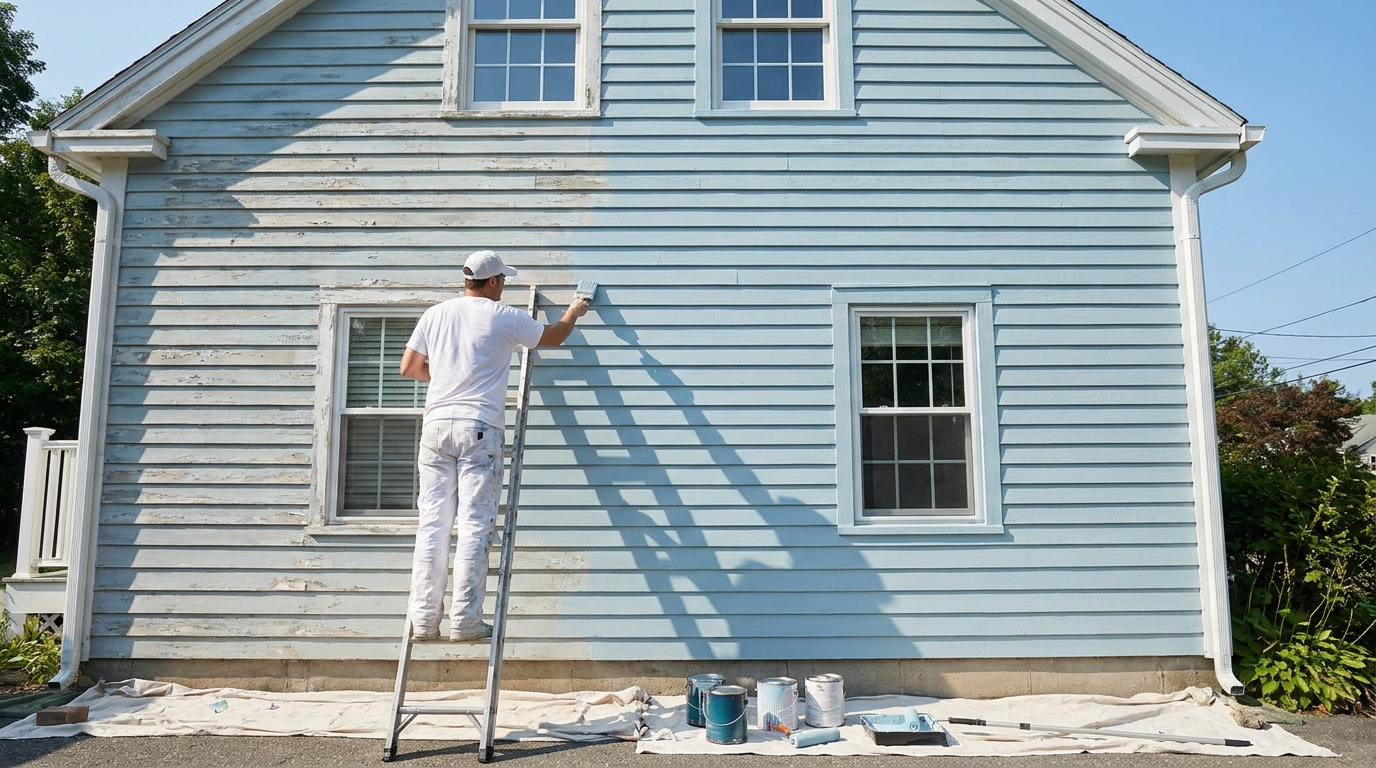
Keeping the exterior of your home in good condition is one of the most important and often underappreciated aspects of property ownership. A well-maintained exterior paint finish does far more than improve your home’s kerb appeal. It acts as a vital barrier against moisture, frost, UV exposure, and the general wear that comes with the British climate. Knowing how often to paint your house exterior, however, is not always straightforward, and the honest answer is that it depends on a range of factors specific to your property.
In this guide, we walk you through the key considerations that shape your home’s exterior repainting schedule, from the material your walls are made from and the quality of paint used, to the visible warning signs that tell you it’s time to act.
Is the 5 to 10 Year Guideline Actually Accurate?
You may have come across the general advice that a house exterior should be repainted every five to ten years. This is a reasonable starting point, but it is not a fixed rule that applies to every home. In reality, the right repainting interval will depend on the type of surface material, the quality of the products used, the standard of preparation during the last application, and the environmental conditions your property is exposed to.
Some homes in sheltered positions, with high-quality masonry paint applied to a thoroughly prepared surface, may not need repainting for fifteen years or more. Others, particularly those in exposed or coastal locations, or with timber cladding that has not been properly maintained, may need attention well before the five-year mark. Treating five to ten years as a guaranteed lifespan can lead homeowners to either spend money before it is needed or, more commonly, leave vulnerable surfaces unprotected for too long.
We recommend thinking of repainting as part of an ongoing maintenance commitment rather than a one-off event on a fixed schedule. Regular inspection and timely action will always produce better long-term results than waiting for a set number of years to pass.
Signs That Your Exterior Paint Needs Attention
Rather than working to a rigid schedule, it is worth inspecting your home’s exterior regularly for signs of deterioration. The following are clear indicators that repainting may be required.
Peeling or flaking paint is one of the most visible signs that a coating has broken down. Once paint begins to lift away from the surface, it leaves the material beneath exposed to moisture, which can accelerate damage and decay over time.
Cracking or crazing occurs when paint loses its flexibility and can no longer move with the surface beneath it. This is particularly common on older painted masonry and render, where natural movement can stress the paint film over time.
Fading and chalking are signs of UV degradation. A chalky residue that rubs off when you touch a painted wall indicates that the paint’s binders have broken down, reducing its protective effectiveness considerably.
Damp patches or staining on interior walls can sometimes trace back to a failing exterior paint film. If water is penetrating the outer surface, prompt action is essential to prevent wider structural issues developing.
Bare or exposed areas, especially around window frames, soffits, and fascias, should never be left unattended. These are the points where moisture most easily gets in and can cause lasting harm to both the surface material and the structure behind it.
We recommend carrying out a visual inspection of your home’s exterior at least once a year, and again after periods of harsh weather, to catch any issues before they escalate into something more serious and costly.
How Surface Material Affects Repainting Frequency
One of the most significant factors in determining your repainting schedule is the material your home’s exterior is made from.
Masonry and rendered surfaces are among the most common exterior finishes on UK homes. High-quality masonry paint applied to a well-prepared surface can last anywhere from ten to fifteen years, and some premium exterior coatings carry manufacturer guarantees that extend well beyond that. According to Homebuilding & Renovating, certain durable masonry paints are formulated with a lifespan of fifteen years or more. That said, the porosity of the render, the presence of any existing cracks, and the quality of surface preparation will all influence how well the finish holds up.
Timber cladding and wooden surfaces require more frequent attention. Wood is a natural material that responds to changes in moisture and temperature, expanding and contracting in ways that place ongoing stress on any coating applied to it. As Rawlins Paints notes, wood cladding in the UK climate may need repainting every three to seven years, depending on its exposure and the products used. Failing to maintain painted timber in good time can allow moisture ingress, which leads to rot that is far more costly to address than a routine repaint would have been.
UPVC window frames, soffits, and fascias are not typically painted in the same way as masonry or timber, but where they have been previously coated, that finish will have its own lifespan. Specialist coatings formulated for UPVC surfaces can last between five and ten years before they begin to show signs of deterioration.
Metalwork, including gates, railings, and external pipework, should be inspected regularly for rust and surface breakdown. Protective coatings on metal can fail faster than on other surfaces if not properly maintained, and once rust begins to spread, it requires prompt attention to prevent further deterioration.
How the UK Climate Influences Paint Longevity
The British climate creates genuinely demanding conditions for exterior paint. While we do not face the sustained extreme heat found in other parts of the world, the combination of persistent rainfall, frost, fluctuating temperatures, and intermittent sunshine puts consistent stress on any exterior coating.
Rain and moisture are the primary concerns in the UK. Water finding its way behind a paint film will cause it to bubble, peel, and eventually fail. Properties in particularly exposed locations, such as those in upland areas or close to the coast, will typically see a shorter repainting cycle than homes in sheltered, inland settings.
Frost and freeze-thaw cycles place significant physical stress on painted surfaces during the colder months. When moisture trapped in porous masonry freezes, it expands, which can cause cracking and surface damage that affects both the substrate and the coating above it. Addressing any surface repairs before winter sets in and ensuring gutters and drainage are functioning properly can help protect your exterior through the harshest conditions.
UV exposure, even in the UK’s relatively moderate sunshine, causes paint to fade and lose its protective properties over time. South and west-facing elevations generally show more UV degradation than north or east-facing walls and may need attention sooner as a result.
Coastal properties face a particularly aggressive combination of salt-laden air, strong winds, and persistent moisture. Owners of homes in these locations should expect to maintain their exterior finish on the shorter end of any recommended interval and should look for products that offer enhanced weather resistance.
Why Preparation and Paint Quality Matter So Much
The quality of surface preparation and the paint itself will have a greater influence on how long an exterior finish lasts than almost any other single factor. A low-grade paint applied to a poorly prepared surface may begin to fail within three or four years, even on a relatively sheltered property. A high-quality product applied correctly to a properly cleaned, primed, and repaired surface will provide superior protection and last considerably longer.
Thorough preparation includes removing algae, mould, and loose or flaking material, repairing cracks and damaged render, and applying the right primer before painting begins. Cutting corners at this stage is one of the most common reasons exterior paint jobs fail well short of their potential lifespan.
This is where professional expertise genuinely makes a difference. At Arranmac, our exterior and domestic decorating services place equal emphasis on preparation as on application, because we know that a well-prepared surface is the foundation of a finish that truly lasts.
The Case for Proactive Maintenance
There is a meaningful difference in both cost and disruption between maintaining an exterior that is in reasonable condition and restoring one that has been left to deteriorate over many years. A proactive approach to property maintenance gives you far greater control, allowing you to plan and budget for repainting at a convenient time and under the right conditions.
Simple habits such as washing down exterior walls once a year to remove algae and dirt, keeping gutters and downpipes clear so that water is directed away from walls, and touching up minor areas of damage promptly, can all contribute meaningfully to extending the life of your exterior paintwork. Waiting until paint has fully failed before taking action is almost always a more expensive outcome than addressing things at the right time.
Getting Professional Advice and a Free Quote
If you are unsure whether your home is due for an exterior repaint, or if you have noticed any of the warning signs described above, it is worth seeking a professional assessment. An experienced decorator will be able to evaluate the condition of your existing paintwork, identify any underlying issues, and recommend the most suitable course of action.
Every project we take on at Arranmac begins with an initial site visit, during which we properly assess the work required before providing a clear, itemised quote with no obligation. We are happy to talk through everything in detail before you commit to anything, and we keep our clients informed at every stage from start to finish.
Our customers regularly speak to the quality and reliability of our work. As one recent client told us: “Excellent work, turned up when they said they would, and the work was to a very good standard… Communication was good, he is conscientious and works to a high standard. His prices are competitive too. Highly recommended.”
Whether you are addressing visible signs of wear, preparing a property for sale, or planning ahead as part of a regular maintenance programme, we are ready to help. Contact us today to arrange a convenient time for a site visit and receive your free, no-obligation quote.